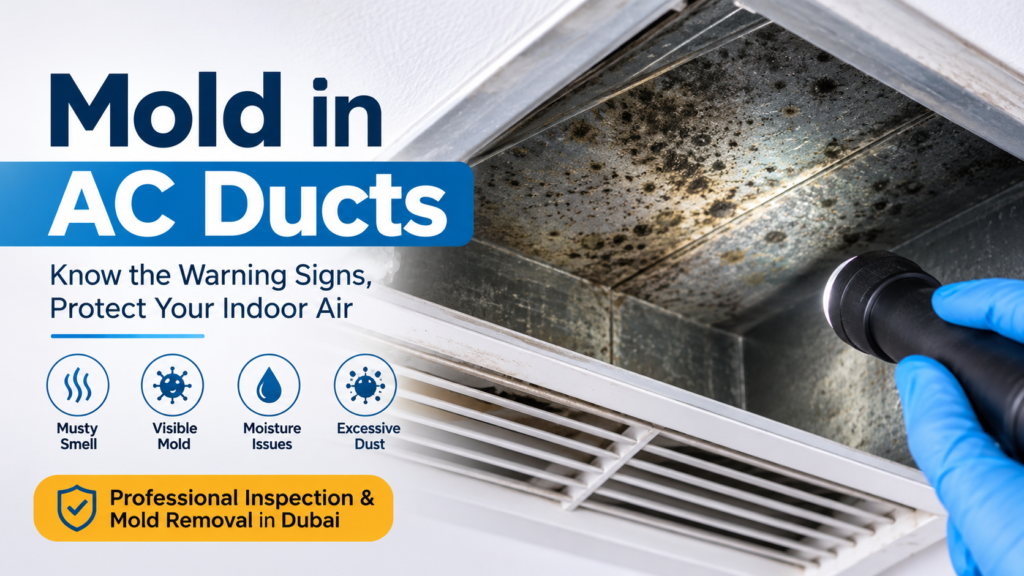
Air conditioning is essential in Dubai to ensure you remain comfortable, especially during the hotter months. Most homes and workspace rely on their air conditioning systems to maintain a pleasant indoor environment. However, issues can sometimes develop within the AC ducts. Moisture, dust and improper maintenance can create conditions that allow mold to grow inside the duct work. In some cases, hidden water leaks or condensation may contribute to the problem, making professional leak detection Dubai services important for identifying the underlying source of moisture. This is an issue property owners should be aware of to maintain a cleaner and healthier indoor environment.
One issue with mold growing in the ducts of your air conditioning is that it often grows in areas that are not visible. You may have taken great care to keep your property clean, filters maintained and rooms tidy, but mold could still be growing in the ducts, around your cooling components, and/or where condensation has built up.
You may start to notice signs of the mold growing. There may be a musty smell coming from your air conditioning, dark spots around your vents, recurrent dampness around the ceiling voids, or general concerns about the air quality.
It is important for homeowners, tenants, landlords and commercial property managers in Dubai to be aware of these signs. By having a professional inspection and mold treatment, you can address the affected areas and identify the cause of the moisture.
Why Does Mold Grow In The Ducts?
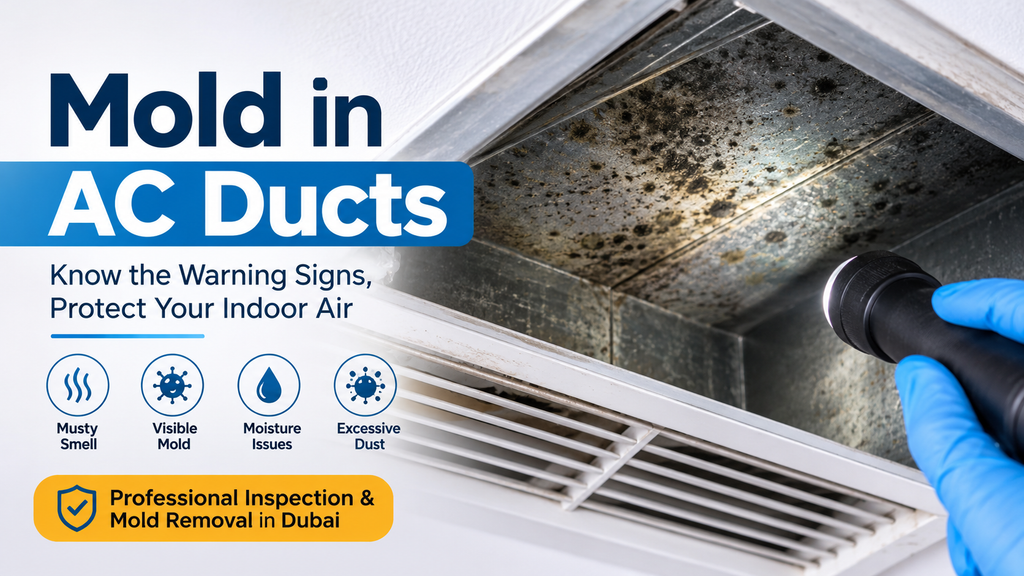
Mold is a type of fungus that can grow wherever it finds moisture and suitable organic matter. Air conditioning units can create ideal conditions for mold growth due to condensation, humidity, dust accumulation and poor airflow.
When an air conditioning unit is running, warm air passes over cold components, causing condensation to form. This moisture should drain away properly through the condensate drainage system. If the drainage becomes blocked, damaged or does not function correctly, water can accumulate inside the unit or surrounding areas, creating a suitable environment for mold to develop.
In such situations, Water Leak Detection Dubai services can help identify hidden water leaks and moisture sources that may be contributing to the problem. Finding and addressing the underlying cause is important because cleaning visible mold alone may not prevent it from returning.The ducts can also become full of dust and debris. When this gets damp, it can create conditions for mold to grow.
There are often a few reasons why mold can be growing. This can be due to a blocked condensate drain, damaged insulation, poor maintenance of the cooling components, or high humidity. Sometimes, the issue can be unrelated. For example, there could be a plumbing or building leak causing moisture to get to the ducts or ceiling void.
This means that simply wiping the vents won’t help. The mold can come back due to the moisture.
Common Signs Of Mold In The Ducts
Although mold may not be visible in the ducts, signs will appear inside the property showing that you should inspect your air conditioning.
1. Musty Smell
One of the most obvious signs of mold is a constant musty/damp smell coming from the air conditioning vents.
This could be an immediate issue or get worse after running the air conditioning for a while. It can often smell like a damp cupboard or wet fabric.
This doesn’t mean there will definitely be mold. There could be dust build up, dirty filters, stagnant water or other drainage/maintenance issues causing the unpleasant smell. However, if the smell keeps coming back despite basic cleaning, it’s best to have a professional inspection.
2. Dark Marks Around The Vents
Look closely around your air conditioning vents. There may be dark, gray, green or black markings around the air conditioning grille or ceiling. This could be mold or something else.
This can sometimes be due to condensation around the cold components, moisture getting to the area or poor insulation. Whilst this can give you an indication, it can’t guarantee what it is.
If you notice some unusual staining, don’t try and vigorously wipe it away. Take a photo and have it assessed to see if it is mold, dirt or something else due to the moisture.
3. Water/Dampness Around The Vents
Never ignore water around your air conditioning vents or ceiling void. This could indicate there is condensation, a drainage issue, damaged insulation or some other form of water getting to the ceiling.
It could be due to a blocked condensate drain causing water to build up. Or the insulation around the cold ducts could be poor or damaged. This can cause condensation.
If dampness continues, you won’t fix it by wiping the vent. You’ll need to identify the issue.
4. Mold Comes Back After Cleaning
If the mold disappears when you clean it but comes back, this can be a sign.
Usually, we haven’t addressed the conditions that cause the mold to grow. For example, if you clean a stained ceiling it may look better but if there is a hidden leak or constant condensation above it, it will come back.
This can apply to the ducts. If you’re simply removing the visible mold without identifying the cause of the moisture, it may only be a temporary fix.
5. Too Much Dust Around The Vents
A lot of dust around your air conditioning vents indicates that maintenance is needed. Whilst this doesn’t necessarily mean there will be mold, it can contribute to poor conditions in the property especially if there is moisture.
Check if the filters are dirty, if there seems to be poor airflow, and if there is a build up of dust.
If there is a consistent musty smell or visible dampness, you may want to have a closer look at the air conditioning.
6. Condensation On Surrounding Areas
Look out for any moisture around the ceiling voids, duct connections and surrounding areas when the air conditioning is running.
Condensation can occur when warm and humid air hits a surface that is cold enough. Poor insulation, gaps, and high humidity worsen condensation.
If there is constant condensation occurring, it can cause the surrounding materials to become damp. It’s important to find out why the surface is becoming damp.
Why Mold In The Ducts Can Be An Issue In Dubai
In Dubai the climate can cause issues with air conditioning. During humid periods, there will be a lot of moisture coming into the property from the warm air outside. The cooling inside can cause cold surfaces and temperature differences. If there isn’t proper insulation, drainage or humidity control, this can cause condensation.
Running the air conditioning for long periods leads occupants to use the cooling components and ducts frequently. This means proper maintenance of the filters, condensate drain, insulation and internal components.
This can affect many different properties.
In an apartment, it could be a single room or area of the ducts. In larger villas there may be multiple cooling areas with longer ducts meaning there could be multiple areas to investigate. Commercial properties often have more extensive ventilation systems to be investigated.
The most important thing to remember is that mold shouldn’t be seen as a cosmetic issue. If there is moisture in the system, you need to understand why and choose the right treatment.
Can Mold In The Ducts Affect Air Quality?
Air conditioning circulates air throughout the property. If there is mold growing in the affected area, this can cause particles from the mold to become airborne.
People may notice a musty smell or feel irritated. Mold can cause allergic reactions in some people. Damp and moldy environments can cause issues with your respiratory system, especially if you suffer from asthma or other sensitivities.
However, it’s important to remember that headaches, coughs and breathing issues can have many causes. Only a qualified health professional can assess someone’s condition.
If there is visible mold or constant dampness, it makes sense to investigate the area. Once the issue causing the moisture is resolved, the area can be cleaned properly. If someone is very sensitive to mold, they should not attempt to clean the mold.
Where Will Mold Often Grow?
Mold doesn’t necessarily grow throughout the entire air conditioning. It often grows in specific areas.
Inside/Outside Of The Ducts
Over time dust can build up in the ducts. If there is moisture getting in or condensation occurring, this can cause mold to grow in the affected areas.
Consider the insulation of the ducts and surrounding ceiling. If there is damaged or poor fitting insulation this can cause condensation.
Around The Cooling Coils
The cooling coils remove heat and moisture from the air. As condensation will naturally occur, it’s important to consider the drainage and maintenance.
If there is poor drainage or excessive dampness, this can cause contamination around the area.
Around The Drain Pan And Condensate Lines
The condensate drain pan collects the water created during cooling. This water is then removed via the drainage lines.
If the drain becomes blocked or the pan isn’t draining properly, water can build up. This can cause mold to grow in the area.
Around The Vent Openings And Ceiling Voids
If there is mold visible around the vent, this can be due to condensation on the surface, a hidden leak or contamination in the area. Consider the ceiling void if it is accessible. There could be moisture above the vent. Simply wiping the vent grille won’t address the whole issue.
Why Wiping The Filter Won’t Help
Changing/cleaning the air conditioning filter is an important part of regular maintenance. However, this doesn’t necessarily remove mold from the ducts.
The filters help to trap airborne particles. This doesn’t necessarily clean the surfaces of the ducts, drainage, cooling coils etc.
If the mold has grown beyond the filter, changing it will help the filtering but won’t address the issue.
Spraying air freshener around the vent or using a general household cleaner won’t address the issue. Some products aren’t suitable for use in HVAC systems. Using chemicals without knowing what the mold is on can cause further issues.
Identify where the contamination is, why there is moisture, and choose the correct treatment.
How We Can Help With Mold In The Ducts
We should always start by assessing the issue. This will help us understand how much of the area is affected and why it is occurring.
1. Look For Visible Signs
The first thing we will do is have a look at the areas that the issue has been noticed. This can include the vents, surrounding ceiling, accessible duct openings and areas of moisture/staining.
We will also consider how long the issue has been going on. Has the smell been there for a few weeks? Is there moisture only when the air conditioning is running? Has the mold been coming back after being cleaned?
This can help us to target our investigation.
2. Find The Cause Of The Moisture
Finding the cause of the moisture is extremely important. This can be caused by condensation, blocked condensate drain, damaged insulation, plumbing leak or water coming from another area of the property.
Depending on the cause, we will need to find the right solution. Should a leaking pipe occur, cleaning alone won’t help. If there is a leak, this won’t necessarily remove the mold.
If there is suspected leaking, we may need to perform a suitable investigation to find the cause.
3. Assess The Affected Air Conditioning Components
Once we know the area we suspect the issue to be, we will look at the accessible components. This can include the inside of the ducts, vents, drain pans, condensate lines and surrounding insulation.
We will identify what materials are affected and what needs to be cleaned, repaired, replaced or professionally treated.
4. Choose The Right Mold Treatment
Depending on the type of materials, where the mold is and how much there is.
We can professionally clean the affected areas. This will include removing any contaminated materials and using suitable products to treat the area. We will ensure we take the correct precautions to prevent the contamination spreading into the occupied areas.
Not every duct can be treated in the same way. If the materials are porous or heavily contaminated, they may need replacing.
5. Address The Cause Of The Mold
This is equally as important as the cleaning. We need to address any issues with drainage, leaking, damaged insulation or constant condensation. This will help to reduce the conditions that are causing the mold to grow.
If there is suspected leaking, we will find the source and repair it. If it is condensation, we will review the insulation, airflow or humidity.
How To Help Prevent Mold Coming Back
By carrying out regular maintenance on your air conditioning you can help to reduce the chances of the same conditions occurring again.
Ensure you keep your air filters clean. Follow the manufacturers guidelines for when to clean or replace them. A dirty filter can cause poor airflow.
Have your air conditioning serviced regularly by a qualified HVAC professional. This should include checking the cooling components, condensate drainage and other accessible components.
Look out for any water around the indoor units, ceiling voids or vents. If there is constant condensation, investigate the issue.
Consider the humidity in your property. Ensuring good ventilation and suitable humidity control can help to reduce excessive moisture. This will depend on the building and air conditioning.
If there is a constant musty smell, it may be time to have a more detailed inspection.
When Should I Contact A Professional?
If you’re noticing visible mold around the vents, constant musty smell, constant condensation, dripping water from the opening or mold coming back after cleaning, it’s best to have a professional inspection.
Especially if the mold is in the ducts or somewhere that can’t be accessed safely.
Don’t try to open up the ducts, remove the insulation or try to clean the suspected mold. This can cause the particles to become airborne. If there is a large amount of contamination or porous materials, specialist treatment may be required.
If people are suffering from health issues, they should seek the correct medical advice.
Why It’s Important To Fix The Moisture Issue
It’s most effective to treat the mold once you understand the issue with the moisture. For example, there may be dark staining around your air conditioning vents. Whilst this can be cleaned to look better, if the insulation is damaged and causing condensation above the ceiling, it may come back.
If there is a blocked condensate pipe, water may still be building up.
This can often link to mold investigations and leak detection. We will accurately locate any suspected leaks.
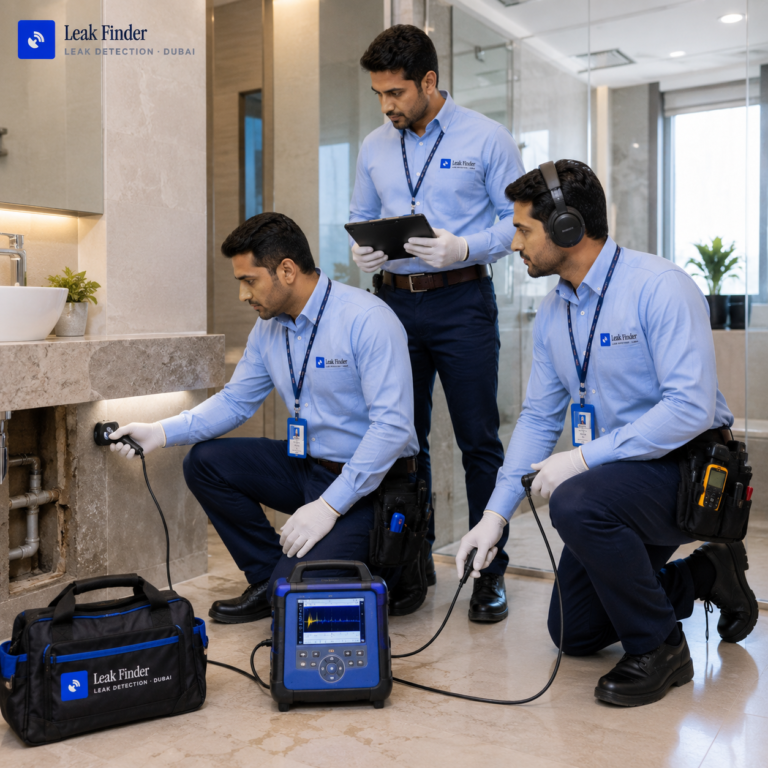
Leak Finder offer moisture and leak investigations for properties in Dubai. We can help you identify any moisture issues that could be contributing to mold around your air conditioning. If mold treatment is required in the ducts, we will investigate the affected areas so we can organize the correct cleaning.
Whether it’s a musty smell, visible staining, constant condensation or water around the vents, it’s important to look past the visible issue.
A suitable service will look at the area affected, cause of moisture and what needs to be done to reduce the chance of it coming back. They will also explain what can be treated, if any materials need replacing and if any further specialist work is required on the HVAC.
Keep Your Property Comfortable And Dry
Your air conditioning should make your home or workplace comfortable. It shouldn’t cause constant damp smells or moisture issues. Mold in the ducts can be difficult to identify as much of it is hidden. However, if you’re noticing constant smells, visible staining, condensation or unexplained moisture, it’s worth investigating.
The best way to deal with this issue is to identify the area affected, understand why the moisture is building up and organize the correct professional treatment. Simply wiping the mold may only be a temporary fix.
By keeping your air conditioning well maintained and addressing any moisture issues quickly, property owners and managers in Dubai can help to keep the property in good condition and create a more comfortable environment.
If you’re noticing signs of mold around your air conditioning vents or suspect there is an unseen moisture issue, contact Leak Finder.