Mold developing on wooden furniture, cupboards and wardrobes can cause homeowners to become concerned. Whilst it might seem as though there is a lack of ventilation and/or high humidity causing mold to grow, there could be an invisible water leak causing excess moisture. A professional Leak Detection service in Dubai can help determine if there is a water issue.
Residents in Dubai can use air conditioning year-round, but moisture may cause an issue. A blocked AC condensate drain, damaged connections, or poor insulation on the duct causes water buildup around ceilings and walls. This can cause water build up around the ceilings, walls and any wooden items nearby. Eventually causing bad odors, paint damage, swelling and mold.
It is important to know where the issue is coming from. Whilst cleaning may improve the appearance, if water is getting into the area it will not solve the issue. Try to find out the origin of the issue, whether it is your wooden furniture, AC duct or damp ceiling.
Why does wood get moldy in Dubai homes?

Wood is very prone to absorbing moisture. If left to become damp for an extended period of time it can cause mold to grow. People often find mold on wardrobes, kitchen cupboards, wooden doors, flooring, cupboards, and furniture near damp walls.
It can start from a small issue such as a leaking pipe behind your kitchen cupboard or moisture coming from an outside wall. Or water dripping from an AC drain.
Initially there may just be a damp smell or discoloration. But over time it can cause black spots, peeling, swelling and a textured surface.
Furniture that is directly next to an outside wall can be prone to issues. If there is moisture coming through the wall or condensation building up due to poor insulation there may not be much airflow causing the damp to go unnoticed.
Remember that mold does not always mean there is a pipe leak. There can be many reasons such as humidity, condensation, poor ventilation and water seepage. An inspection can help identify the cause.
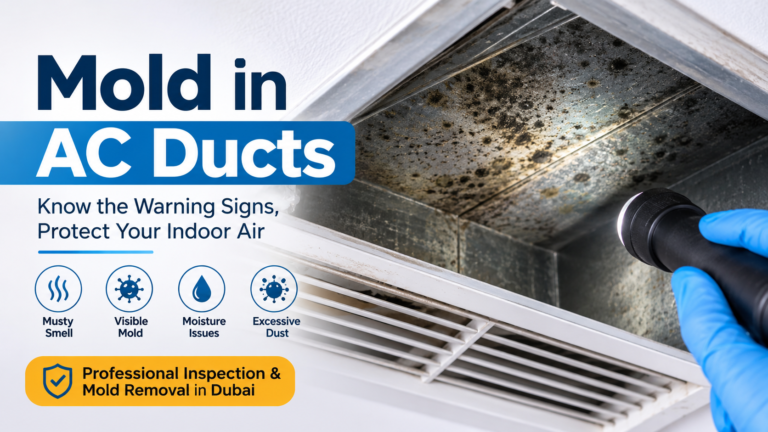
Can AC Ducts cause mold and moisture issues?
Yes, but not necessarily from the duct itself. If there is condensation due to the air conditioning system not managing it correctly.
Warm, moist air can cause condensation if it comes into contact with a cold enough surface. The air con system removes moisture from the air, but you must drain the condensate. If the drain line is blocked, damaged, disconnected, or improperly installed, water can pool around the AC unit and damage nearby materials.
Poorly insulated ducting can cause condensation on the exterior. This can cause issues with the ceiling boards, insulation, surrounding plaster and wooden materials.
Often the first issue noticed is a water stain near an AC vent or a damp smell. Some homeowners may notice dampness in their false ceiling or mold on a nearby wooden cupboard.
We should address all of these issues. As often the damage will not be directly above the issue. The water can travel along the ceiling, slabs and hidden areas.
Common Issues with Moisture
Often the issues will not be a large leak but small issues with the room.
Black spots and mold
There may be black, green, gray or white spots on your wooden furniture, inside your cupboards, wardrobes, skirting boards or flooring. It will not be possible to tell what type of mold it is from just the color.
If there are regular spots appearing in the same area then investigate further. Painting over or using a surface cleaner will just be a temporary fix.
Swelling and damage
The wood can warp due to the moisture. Cabinet doors may become difficult to close, warping of furniture edges and lifting of laminated materials.
This can be due to water entering from a nearby wall, floor, pipe or AC leak. Look at the area to see if there is any damp patches.
Unusual Odor from AC Vents
If there is an odd smell when your air con turns on this can indicate there is an issue.
Don’t automatically assume it is coming from the duct. It can be due to damp in the ceiling void, wet insulation, drainage or another moisture issue.
Water Stain on Ceilings
There may be yellow or brown stains near your AC vents, corners of your ceiling or joins in your false ceiling. This can indicate there has been or currently is water present.
If the stain is getting darker, bigger or coming back after painting then it is best to investigate further. Often the stain will not be directly above the issue and so painting over it won’t fix it.
Peeling Paint and damp wall
If the paint is bubbling, peeling or lifting from the wall this can indicate there is moisture. If there is a wooden wardrobe or cupboard against the wall mold may eventually appear on the back.
A moisture test can help identify if there is an isolated issue.
AC Condensate Drain Issues
One issue to investigate in your Dubai property is the AC condensate drain.
Air conditioning removes moisture from the air inside your property. The air conditioner collects condensate and drains it via the condensate drain. If there is an issue with the drain line water can overflow and cause issues.
If the condensate drain becomes blocked water can pool around your indoor AC unit. Depending on the installation this can cause issues with your ceiling, wall, insulation or surrounding areas.
Common issues can include dripping water from near your indoor unit, damp around ceiling openings, regular staining and becoming noticeable after running for a while.
When carrying out an inspection of your AC condensate drain in your property consider how accessible the drain is, connections, signs of a blockage and visible water damage. Consider the insulation and surrounding ceiling.
Not all ceiling leaks near your AC unit will be caused by the condensate drain. It could be an issue with your pipes, roof, water tank or other source. Correct investigations are needed to determine what needs fixing.
Why simply cleaning mold won’t help
Often if you find mold on your wardrobe or wooden cupboard the first thing to do is clean it. Whilst this can help with the visible mold it will not fix the issue.
If water is still getting into the material then mold can return. This can also be an issue if you repaint a damaged ceiling but there is an AC drain leak.
To ensure a long term fix consider:
What is the source of the moisture? It could be a leaking pipe, condensation, AC drain or water getting into the building.
How big is the issue? The mold may be a small area but there could be damp behind your furniture, inside your cupboard or above your ceiling.
What needs fixing? This could include fixing the pipe, clearing/repairing the drain connection, improving insulation, fixing waterproofing, drying the materials or correct mold remediation.
Make sure mold is removed safely. If there is a large area of mold or heavily contaminated materials then people with health concerns shouldn’t disturb it. Seek correct professional advice.
How can a professional Leak Detection help find hidden moisture?
Hidden leaks can be difficult to find as the water may not be coming from where the leak is.
For example there may be a leaking pipe above the ceiling and the water runs along the concrete slab and comes out by the light fitting. Or there could be an issue with the AC drain connection causing moisture to run into the ceiling materials.
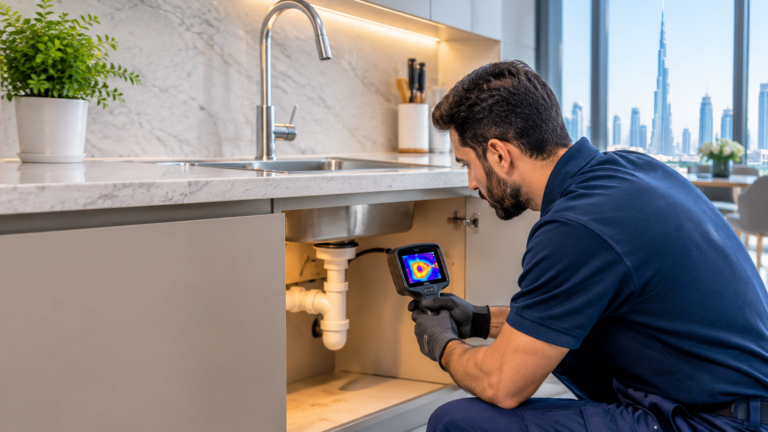
A professional Water Leak Detection service in Dubai can help. Rather than cutting open walls or tiles a technician will use the correct technique to investigate the area.
The equipment used will depend on the type of leak suspected, building material and symptoms.
Thermal Imaging
Thermal imaging cameras can help by showing the temperatures of surfaces. As moisture can effect how the building materials absorb and release heat there will be temperature differences that can help identify areas of concern.
This is a great tool to use on walls, ceilings and flooring without causing immediate damage.
However it will not show water behind the wall directly. There can be many reasons for temperature differences so it is best to use the correct confirmation techniques.
Moisture Mapping
Using a moisture meter can help identify how much moisture is in accessible building materials. Comparing the readings between the affected and unaffected areas can help identify where the damp is.
This is useful if there is mold on wooden materials or damp on the wall.
Mapping the affected area can also help identify if there is a small area of damage or more widespread.
Acoustic
If there is a leak in a pressurized water pipe there will be noise coming from the water escaping. This can be picked up by the technician using acoustic equipment. This is a great tool to use if there is a hidden supply pipe in the floor, wall or concrete.
This may not be suitable for all moisture issues. If there is an issue with the AC condensate drain or waterproofing then a different investigation may be needed.
Pressure Testing & Tracer Gas
If applicable pressure testing can help identify if there is a loss of pressure in the water supply. Tracer gas can also help with finding certain hidden or buried leaks.
Choose the correct method depending on what the issue is suspected to be. Using multiple methods can provide more evidence.
AC Water Leak in Dubai
If you are noticing water dripping from your indoor AC unit or dampness around your AC vents don’t assume it’s a blocked filter.
There could be many reasons for an AC water leak in your home including:
Blocked condensate drain.
Damaged/disconnected drain connection.
Poor insulation around cold pipework/duct.
Condensation.
Incorrect slope of drain.
Separate leak in pipes/building near AC.
Consider when the water appears. Is it only after running for several hours? Could the water stain be enlarging? Is it only in one room or several areas?
This can help the technician understand the situation but won’t confirm the cause.
Avoid interfering with any electrical items, dismantling the indoor unit or touching any wet wiring. If there is water close to any electrical items then only turn them off if it is safe to do so and seek professional help.
A correct investigation will help identify if it is coming from the AC drain, another pipe or separate source.
Why early detection is important
If water damage goes unnoticed it can become more expensive. Wooden cupboards can absorb moisture, laminated materials can lift and ceiling boards can become weak.
The issue can also spread. If there is water getting into the wall it can cause issues in adjoining rooms. Or if there is moisture in the false ceiling it can cause issues with the insulation and nearby electrical items.
Early detection will help property owners understand what the issue is coming from so they don’t carry out unnecessary repairs.
For example if there is mold on the back of your bedroom wardrobe it may not be fixed by replacing the wardrobe if there is damp coming from the wall. Or if there is mold on your ceiling it won’t stop the water stains from returning if there is an overflow from the AC condensate line.
By identifying the cause first you know what actually needs attention. It can also help avoid unnecessary demolition as the technician will investigate where the issue is likely to be coming from.
When to contact a Water Leak Finder
A Water Leak Finder can help if you are unsure where the moisture is coming from or previous attempts to fix it have not worked.
Consider an investigation if:
Mold keeps appearing on your wooden furniture/cupboards.
- There is a damp smell and it won’t go away.
- Water stains keep appearing on your repainted ceiling.
- Wall is getting damp with no obvious cause from outside.
- Water marks keep appearing on your AC unit or surrounding ceiling.
- Your water usage is increasing with no obvious reason.
- Suspected leak under tiles/floor/concrete.
Don’t wait for the damage to become extensive. A small damp area can be an early sign of a bigger hidden issue. However it is important to investigate to find the cause.
When contacting a specialist let them know where the moisture is coming from, when you first noticed it, if it changes when the AC is running and if any previous attempts have been made to fix it.
Taking photos of the area can also help the technician understand the symptoms.
How Leak Finder investigate hidden water issues in Dubai
Leak Finder will try to identify where the hidden water leak is coming from to avoid unnecessary damage to walls, floors and ceilings.
They have published information showing they use a variety of techniques depending on what the issue is suspected to be. Utilizes Thermal Imaging, Acoustic Correlation, Tracer Gas, Moisture Mapping, and other suitable tests.
They will firstly understand the symptoms and investigate the area. They will use the appropriate equipment to identify where the issue is likely coming from. If possible they will use a second technique to confirm.
Once the investigation has been completed they will provide a report outlining where the leak is likely to be coming from. They will also provide supporting images and recommendations for repairs. This can help homeowners, landlords, building management and insurers understand what has been found.
If there is suspected moisture from the AC then they should identify if it is from the condensate drain, pipe leak or another part of the building. Repairs should be carried out based on what has been found.
Find out more about their services here.
Prevent Mold & Moisture Issues
Once you have identified where the moisture is coming from and fixed the issue the area should be dried and repaired correctly.
Don’t paint or replace laminate on damp wood. Ensure the wood has dried. If it is still damp it may continue to deteriorate.
Ensure the AC drain is working correctly. Check that any accessible insulation and connections are in a suitable condition. Try to keep furniture away from walls.
Regularly check your cupboards, wardrobes, corners of your ceiling and around your indoor AC units. Ensuring good ventilation and suitable humidity control can help reduce condensation issues.
If there has been mold on porous materials or a large area then seek professional remediation advice. Simply cleaning the surface won’t always remove the contamination.
Most importantly monitor the area. If there is any damp, staining or mold then arrange further investigation.
Protect your home by identifying the source of the moisture
Issues with mold on your wooden furniture, damp ceilings and water around your AC ducts may seem like separate issues but can sometimes be linked by the same issue causing unwanted moisture.
Don’t just treat the visible issues. Replacing your wardrobe, repainting your ceiling and cleaning your AC vent won’t provide a long term fix if there is water getting into the building.
A professional Leak Detection service in Dubai can help homeowners investigate hidden moisture issues. They will identify where the leaks are likely to be coming from and what repairs may be needed. Whether it is a hidden pipe, AC condensate drain or water seepage it is important to correctly diagnose the issue.
If you are noticing recurring mold, damp wood or water stains around your air con system then consider having a professional investigation carried out by Leak Finder. By identifying the source early you can limit any further damage and protect your interiors.